Friends with God? Dream On.

The overwhelming response to my question about whether or not we can be friends with God was yes – emphatically yes!  Some of you were clear that you know God can be your friend because he already is!  Others added helpful distinctions:  God is a different kind of friend than our buddies or even our human soulmates. 

I agree with you.  And you all did such a nice job writing about it that I might just need to turn this blog over to the people.  You should share with me more often!

Now I promised you my own thoughts.  If the question were simply asked on a philosophical level, I might wonder.  I might surmise it was wishful thinking on the part of human beings to aspire to be “friends” with God.  But as usual, Scripture sets me straight, and that’s just the way I like it.  Vatican II refers to Scripture as “the words of God expressed in human language” (Dei Verbum 13).  I can’t think of a better way to learn about friendship with God.

The first Scripture verse that always comes to mind when I think about being God’s friend is Exodus 33:11:  “Thus the Lord used to speak to Moses face to face, as one speaks to a friend.”  The transcendent God of the Israelites was talking with Moses?  No matter how awesome Moses was (and he was), he was still a human being, a creature, an imperfect person.  But there was an intimacy between God and Moses that went down in Israelite lore as genuine friendship.

Abraham was another ancient who was called God’s friend.  He is described as such three times in the Bible:  2 Chron. 20:7, Isa. 41:8, and James 2:23.  How would you like it if this is how people described you?  What if, instead of “short lady with curly brown hair and a bunch of kids,” people said of me, “You know, Amy, the friend of God?”  Gulp!  God give me the faith of Abraham!

Jesus, of course, called his disciples his friends.  And not only his disciples.  Remember this one:  “The Son of Man came eating and drinking, and they say, ‘Look, a glutton and a drunkard, a friend of tax collectors and sinners!’” (Matt. 11:19)?  This was an accusation levelled at Jesus – friend of sinners!  Never has a truer accusation been made!

Of course, we would be entirely remiss on the topic if we did not recall the remarkable words of Jesus said in farewell to his eleven faithful disciples (Judas had left the table):  “This is my commandment, that you love one another as I have loved you. No one has greater love than this, to lay down one’s life for one’s friends. You are my friends if you do what I command you. I do not call you servants any longer, because the servant does not know what the master is doing; but I have called you friends, because I have made known to you everything that I have heard from my Father. You did not choose me but I chose you” (Jn. 15:12-16).  No commentary needed.  These are words to pray by.

And finally, I share with you a passage that says it all.  Yes, Judas had left the table, only to be reunited with Jesus in the garden, where he would kiss Jesus and betray him unto death, even death on a cross.  How did Jesus address Judas as he approached in the garden?  He called him “friend” (Mt. 26:50).

Catherine Doherty wrote that “all men who have religion of some sort are dreamers, and dreamers of a very special kind.  They dream of unity between God and men.”

Friendship is about intimacy.  It is an intentional intimacy.  One of you aptly quoted the wisdom of St. Catherine of Siena:  “God is closer to us than water is to a fish.”  This is the stuff of dreams, indeed, but we know this dream is true.  So dream on, friends of God, dream on!  

Moses and the Lord had an unusual friendship, as depicted in this gorgeous painting by Jack Baumgartner of Moses in the cleft of rock as the glory of the Lord passed by (Ex. 33).  Moses in the Rock.  Copyright 2016 Jack Baumgartn…

Moses and the Lord had an unusual friendship, as depicted in this gorgeous painting by Jack Baumgartner of Moses in the cleft of rock as the glory of the Lord passed by (Ex. 33).  Moses in the Rock.  Copyright 2016 Jack Baumgartner.  Published with permission.  Click on painting to view more of Jack's work.

The Sacred Dynamic of Frank Conversation

Last Sunday’s Gospel reading was the familiar story of Martha and Mary (Luke 10:38-42).  As the reading began, I wasn’t expecting to hear anything new.  I know this one; I know the words of Jesus; I know the lesson.

But I was blessed to be surprised.  I was surprised by the words of Martha.  Not because she sounded distressed, or frustrated, or annoyed with her sister.  I wasn’t surprised by her resentment or even her logic. 

I was surprised by how bold she was with Jesus, how frank, how confident.

Thinking back over the Gospels, there were many people who were quite deferential toward Jesus.  They spoke and acted with fitting respect for the masterful teacher and wonder-worker he was.  But there were others who were surprisingly informal with Jesus.  Perfect strangers approached him – they asked him for things, they touched him, they laid their heaviest burdens on him.  Indeed, many who approached Jesus did not just ask; they commanded!  Remember Jairus:  “My daughter is at the point of death.  Come and lay your hands on her” (Mk. 5:23) or Bartimaeus of Jericho:  “Let me see again” (Mk. 10:51).

Martha’s command was just as direct:  “Tell her to help me.”

Certainly the presence of Jesus made people take notice.  There was charisma, authority, even power over the natural world.  But apparently he was not intimidating.  There was something about his presence that drew people close, unmasking them and inviting frank conversation and bold requests.

Now of course, when we are frank and bold with Jesus, he may be frank and bold with us.   Martha may not have liked Jesus’ gentle rebuke.  But John’s Gospel tells us that Jesus loved her (Jn. 11:5), and she certainly knew that.   There was no need for Martha to hide her heart from Jesus.  The honesty, the unmasking, is what allowed Jesus to penetrate that heart, to love it and transform it.  This is the power of honest prayer, the sacred dynamic of frank conversation.

The Good and The Bad at the Table of the Lord

On Sunday’s celebration of Corpus Christi, I was struck by a line in the Lauda Sion sequence recited at Mass:  “Bad and good the feast are sharing.”

I’ve been thinking a lot lately about how God seems to have a preference for imperfect people.  Read a few pages of Scripture and you discover a murderer was the greatest prophet of the Old Testament (Moses), and one who was at least complicit in murder was the greatest missionary of the New Testament (Paul).  King David was an adulterer but also a man after God’s own heart.  Peter betrayed his best friend and his Lord but in the eyes of that same Lord, he was a Rock.

Bad and good this feast are sharing – this Eucharistic feast, this feast of life, feast of divine love that seeps in and around us.  If we had to be “good” before we could come to the feast, what would be the point?  It is this feast that heals the bad in all of us. 

When it comes to human beings, God prefers transformation to perfection.  This is what his friendship and his table are all about.

Very bread, good shepherd, tend us,
Jesus, of your love befriend us,
You refresh us, you defend us,
Your eternal goodness send us
In the land of life to see.
— Lauda Sion Sequence, Corpus Christi
The Table by Julie Delton.  Originally published on the cover of The Christian Century magazine and published here with permission.  Click on the image for more of Julie's artwork (www.juliedelton.weebly.com).

The Table by Julie Delton.  Originally published on the cover of The Christian Century magazine and published here with permission.  Click on the image for more of Julie's artwork (www.juliedelton.weebly.com).

Walk the Walk

“Whoever says, ‘I abide in him,’ ought to walk just as he walked.”

-- 1 Jn. 2:6

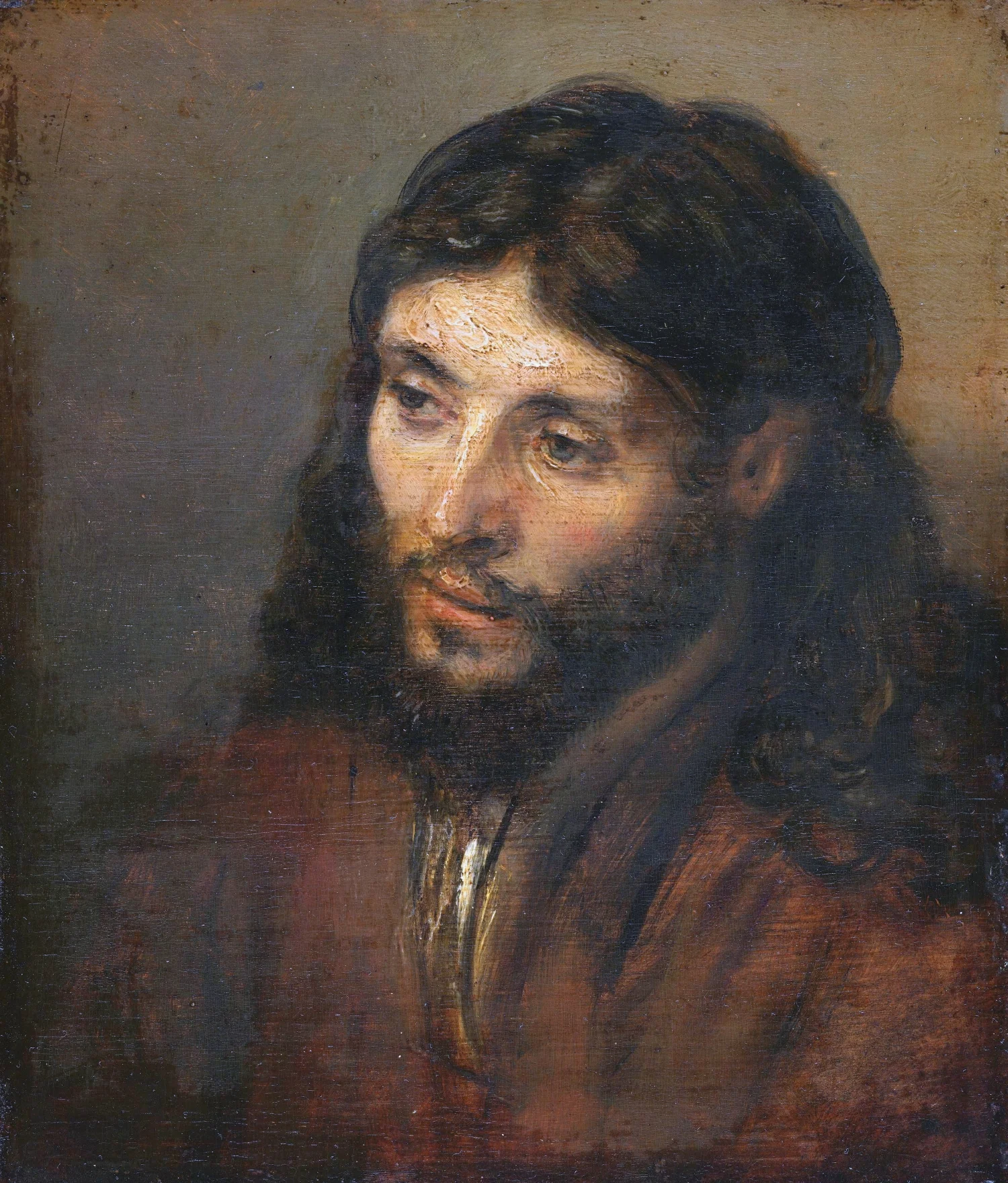
Rembrandt's Head of Christ (1648)

Rembrandt's Head of Christ (1648)

One Hour Retreat for Holy Week

Last year as Holy Week approached, I recommended reading all of Mark’s Gospel in one sitting as a one-hour reflection.  If you have not had a chance to do so, you may wish to do that this year.  Try to forget everything you think you know about Jesus, sit in a quiet place, and listen to him.  You will encounter a raw, passionate preacher and miracle-worker, one who has an urgent message for you.

If you have already read Mark, this year I recommend Jesus’ Farewell Discourse in John’s Gospel (Jn. 14-16).  In last week’s blog post, we reflected on Jesus washing the feet of his disciples, an event that is only narrated in John’s Gospel.  Also exclusive to John is the lengthy discourse that follows.  In this farewell address, Jesus speaks his final words of comfort, his final declaration of unity with the Father, and his final commands to his friends before he lays down his life for them. 

You have read or heard these words before.  They are beautiful, haunting, mystical, profound and personal.  Are you a disciple of Jesus?  Then he is speaking to you.

Sometime in the coming week, sit down with your Bible in a quiet place, or click here to read the text online.  Or click here to print a copy of the text; you can then write your own thoughts and responses to Jesus on the paper.

After class this past week, one of my students commented that John 14-16 should be required reading for every Christian, every few months.  Indeed, we need this personal and profound reminder from Jesus, that if we do not love one another as he has loved us, if we do not lay down our lives for one another in small ways and large, then Jesus will not be present in this world.  With the privilege of being Jesus’ friend (15:15) comes the joyful and challenging responsibility of sharing that friendship with others (15:13).  This is when he truly abides in us, and we in him (15:10).

Reflection questions for John 14-16:

What kinds of things would you say to your loved ones if you knew you were dying?

How do you think the disciples felt when Jesus told them he was leaving, and how does Jesus comfort them?

What is the relationship between Jesus and the Father, and what is their relationship with believers?

How will the Holy Spirit work in our lives in Jesus’ absence?

What is the new commandment of Jesus?  How does Jesus love?  How must we love?

What does Jesus say that especially strikes you as you prayerfully read this text?  What is he speaking to your heart?  How do you respond to him?