Our Forest Is Burning

This week I would like to publish another poem by Scott Eagan, farmer and poet in residence at Madonna House, Combermere, Ontario, the community of prayer and service established by Servant of God Catherine Doherty.  His poem “Dry Lightning” was inspired by the recent Canadian wildfires, but as I’m sure you will see, the poem resonates with the fires that rage within.

DRY LIGHTNING

The air is charged
overfull with heat and smoke and ash
our forest is burning
beast of a wildfire bearing down
torching the houses, the place where we live
we can only pray for rain.

Try as we may, no tears
it is all consuming, nothing left unscorched
flashes from heaven to earth
and from earth to heaven explode as they meet
thunder rolls round the heart
we watch, we wait, we run
while the flames rage in their course
and inside us, the rains pour.

©2016 Scott Eagan

A Prayer for Mothers

This year, Mother’s Day and Pentecost Sunday are just a week apart.  Here’s a prayer to the Holy Spirit that you can say for your mom.  You could even say it for nine days and give her the gift of a novena!  (If you don’t remember what a novena is, ask your mom!)  If your mom has entered eternal life, you can still pray it – she may not need the prayers, but the love you offer by saying it is not without value! 

I based this prayer on St. Paul’s description of the fruit of the Spirit:  “love, joy, peace, patience, kindness, generosity, faithfulness, gentleness, self-control” (Gal. 5:22-23).

Come, Holy Spirit, pour into the heart of my mother the fullness of your life.  Breathe into her your Spirit of love, enliven her with your joy, comfort her with your peace, impart to her your patience, and wrap her in your kindness.  May she grow in your generosity, abide in your faithfulness and be renewed every day by your gentleness.  Fill every emptiness in her heart and in her life with the power of your presence and the quiet of your healing love.  As a mother bonds with her child, may my mother be bound to you in the depths of God’s own heart, O Spirit of wisdom, Spirit of love, Spirit of Jesus, Spirit of joy.  Amen.

Mary Cassatt, The Banjo Lesson, 1893

Mary Cassatt, The Banjo Lesson, 1893

Walk the Walk

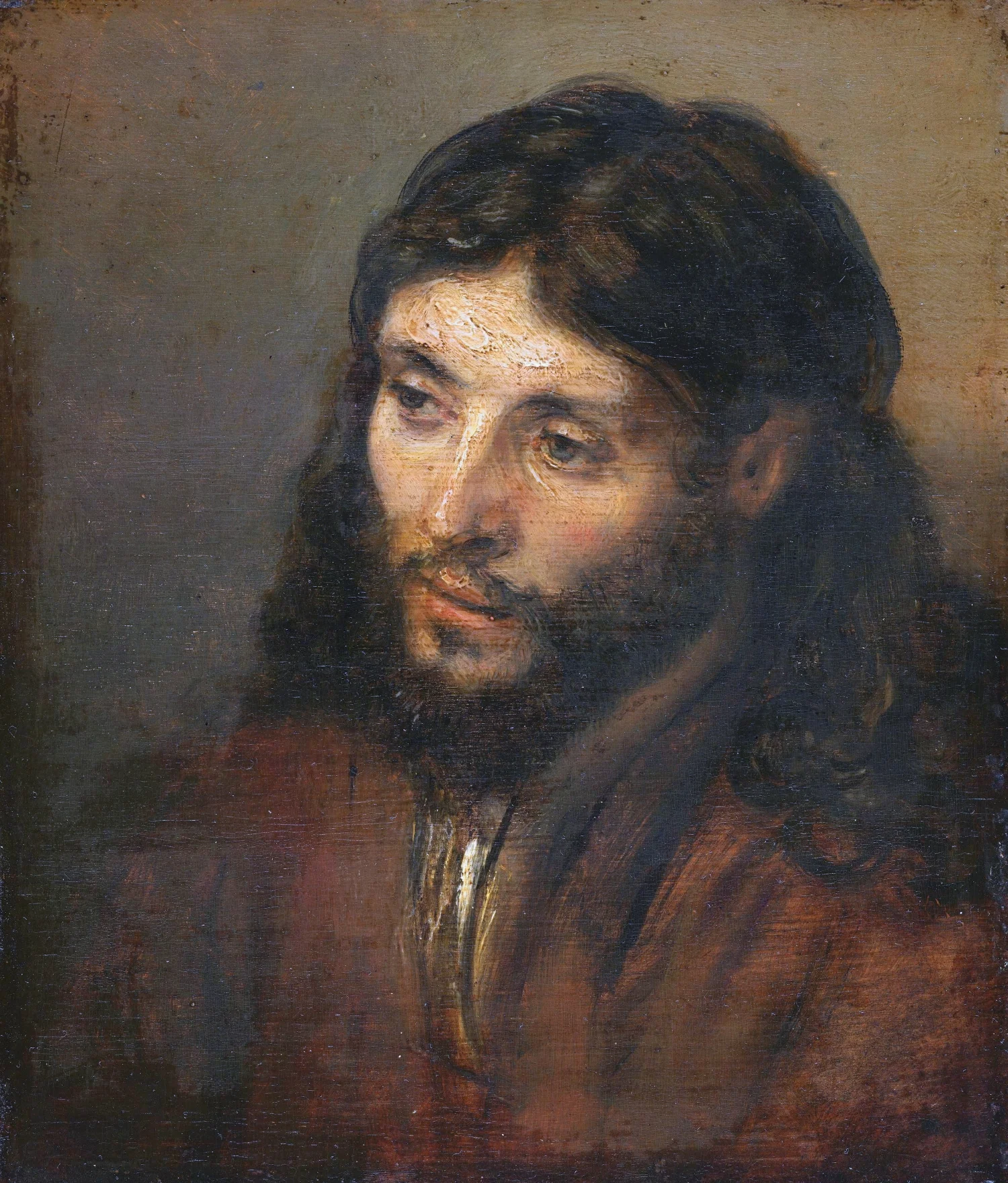
“Whoever says, ‘I abide in him,’ ought to walk just as he walked.”

-- 1 Jn. 2:6

Rembrandt's Head of Christ (1648)

Rembrandt's Head of Christ (1648)

Do We Really Want Heaven?

Have you ever secretly thought that heaven sounds boring?  Let’s face it, for beings who live in time, an eternity of peace and joy can actually sound unpleasantly monotonous!  What will it really be like?  Won’t we grow tired of eating the banquet, beholding the vision, and coasting along in a state of bliss?   

In C.S. Lewis’ wonderful little book, The Problem of Pain, he gives a simple response to those who say they aren’t sure they want heaven.  Heaven is not a mind-numbing forever of boring, sweet goodness.  Heaven is the “other piece,” that thing you have been yearning for but couldn’t put into words, that memory you keep going back to, the reality you’ve only peeked at in fleeting moments.  It’s the thing you love most in every book you’ve read, the satisfaction you have in your work, the understanding you share with a friend, the “secret signature of each soul.” 

The satisfaction of these things is not a static or monotonous reality.  It is not a one-time experience that quickly grows old.  There is dynamism here, relationship, giving over, connection, a unity in diversity that you only glimpsed before.  Heaven is something you already knew but rediscover forever. 

Here is an excerpt from C.S. Lewis’ The Problem of Pain:

There have been times when I think we do not desire heaven; but more often I find myself wondering whether, in our heart of hearts, we have ever desired anything else. You may have noticed that the books you really love are bound together by a secret thread. You know very well what is the common quality that makes you love them, though you cannot put it into words: but most of your friends do not see it at all…. Even in your hobbies, has there not always been some secret attraction which the others are curiously ignorant of – something, not to be identified with, but always on the verge of breaking through, the smell of cut wood in the workshop or the clap-clap of water against the boat’s side? Are not all lifelong friendships born at the moment when at last you meet another human being who has some inkling (but faint and uncertain even in the best) of that something which you were born desiring, and which, beneath the flux of other desires and in all the momentary silences between the louder passions, night and day, year by year, from childhood to old age, you are looking for, watching for, listening for? You have never had it. All the things that have ever deeply possessed your soul have been but hints of it – tantalizing glimpses, promises never quite fulfilled, echoes that died away just as they caught your ear. But if it should really become manifest – if there ever came an echo that did not die away but swelled into the sound itself – you would know it. Beyond all possibility of doubt you would say ‘Here at last is the thing I was made for.’ We cannot tell each other about it. It is the secret signature of each soul, the incommunicable and unappeasable want, the thing we desired before we met our wives or made our friends or chose our work, and which we shall still desire on our deathbeds, when the mind no longer knows wife or friend or work. While we are, this is. If we lose this, we lose all.
— C.S. Lewis, The Problem of Pain

Announcement:

The Franciscan Life Center (Meriden, CT) is presenting “Overcoming Anxiety” Workshops, a six-week series beginning Wed., April 20, from 7:00-8:30 p.m., for ages 16 and up.  Dr. Thomas Finn, clinical psychologist, is the facilitator and presenter.  Click the link below for more information.

Franciscan Life Center Overcoming Anxiety Workshops

Burying the Alleluia

As many of you know, I started my first parish job at the ripe old age of 23, and I had absolutely no idea what I was doing.  Fortunately, my predecessor, Sr. Blanche Twigg, had run a tight ship.  It was just my job to keep it floating.   

Sr. Blanche had many gifts that I did not have, and one was that she really knew how to work with children.  She understood that they are both literal and mystical.  I discovered this about Sr. Blanche as my first Lent in the parish approached. 

About a week before Ash Wednesday, my co-worker in the Religious Education office disappeared into the storage room, rummaged around for a bit, and emerged with an old banner that read “A-L-L-E-L-U-I-A!”  She then informed me that it was almost time to bury it.

Apparently every year, Sr. Blanche would gather the children together and talk to them about Lent.  Then she would fold up the big banner and symbolically bury it.  “ALLELUIA” went dark until Easter, when it was once again allowed to see the light of day.

When I heard about this, I couldn’t decide if it was a stroke of pedagogical genius or a hopelessly depressing gesture.  Saying good-bye to “ALLELUIA” was deeply symbolic but also really sad!

I thought about Sr. Blanche’s banner as I sat in church on Divine Mercy Sunday.  A visiting priest, whose own father is dying in Africa, dug deep and gave of himself and filled the church with Easter laughter.  Interwoven throughout genuine messages of faith, hope and love was humor that brought the room to life and charged it with Christian joy. 

Easter laughter is a long, and some might say strange, tradition of the Church.  There was a time when the liturgy actually called for a good joke during the Easter homily!  Laughter expresses joy, even our joy that He is Risen.   Even in church, even at Mass!  Laughter connects us with others who share our joy and expresses the end of our waiting, the consummation of our longing, the last of our days without alleluias.

We have dug up the “ALLELUIA.”  He is risen, indeed! 

A reflection about Easter laughter by Joseph Ratzinger can be found here.